Week 1: Docker Basics (Lessons 1–5)
Container Forge: Production Docker Patterns for Cloud-Native Foundations
What We Build Today
Multi-stage container images with non-root execution, dumb-init signal handling, and layered caching that cuts rebuild time by 90% on code-only changes
Image optimization pipeline comparing unoptimized (450MB+) vs optimized (~120MB) vs production multi-stage builds with security hardening
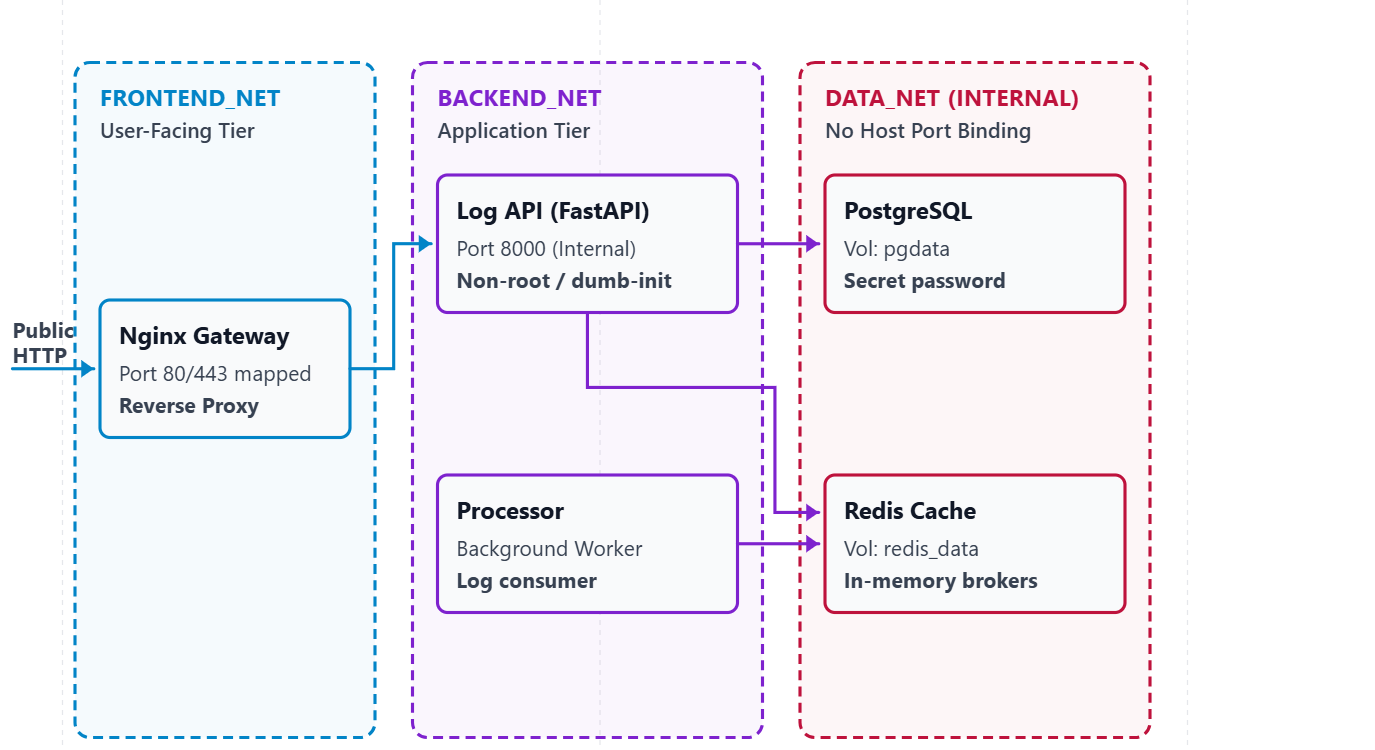
Segmented Docker networks with named volumes, Docker secrets, and healthcheck-driven startup ordering across six services
Break-It-Friday debug lab with three deliberate networking bugs mirroring production DNS and dependency failures
Why This Matters
Every Kubernetes cluster runs containers. The difference between a team that treats Docker as “just packaging” and one that understands image layers, network isolation, and startup ordering is the difference between 2 AM pages and silent rollouts. At Spotify, container images are rebuilt thousands of times daily — layer caching strategy directly impacts developer velocity. At Netflix, non-root containers and minimal base images are non-negotiable security requirements enforced before any image reaches production AMIs. Airbnb’s migration to Kubernetes failed initially because teams skipped Docker networking fundamentals — services couldn’t resolve each other because network policies and DNS were treated as “Kubernetes problems” rather than container problems that persist in orchestration.
This week establishes the substrate. Kubernetes does not replace Docker networking — it wraps it. A Pod’s containers share a network namespace; a Service’s DNS name resolves through CoreDNS using the same alias semantics as Docker Compose. Engineers who master Week 1 patterns deploy Week 2 Kubernetes manifests with intuition rather than trial-and-error.
Docker Architecture Deep Dive