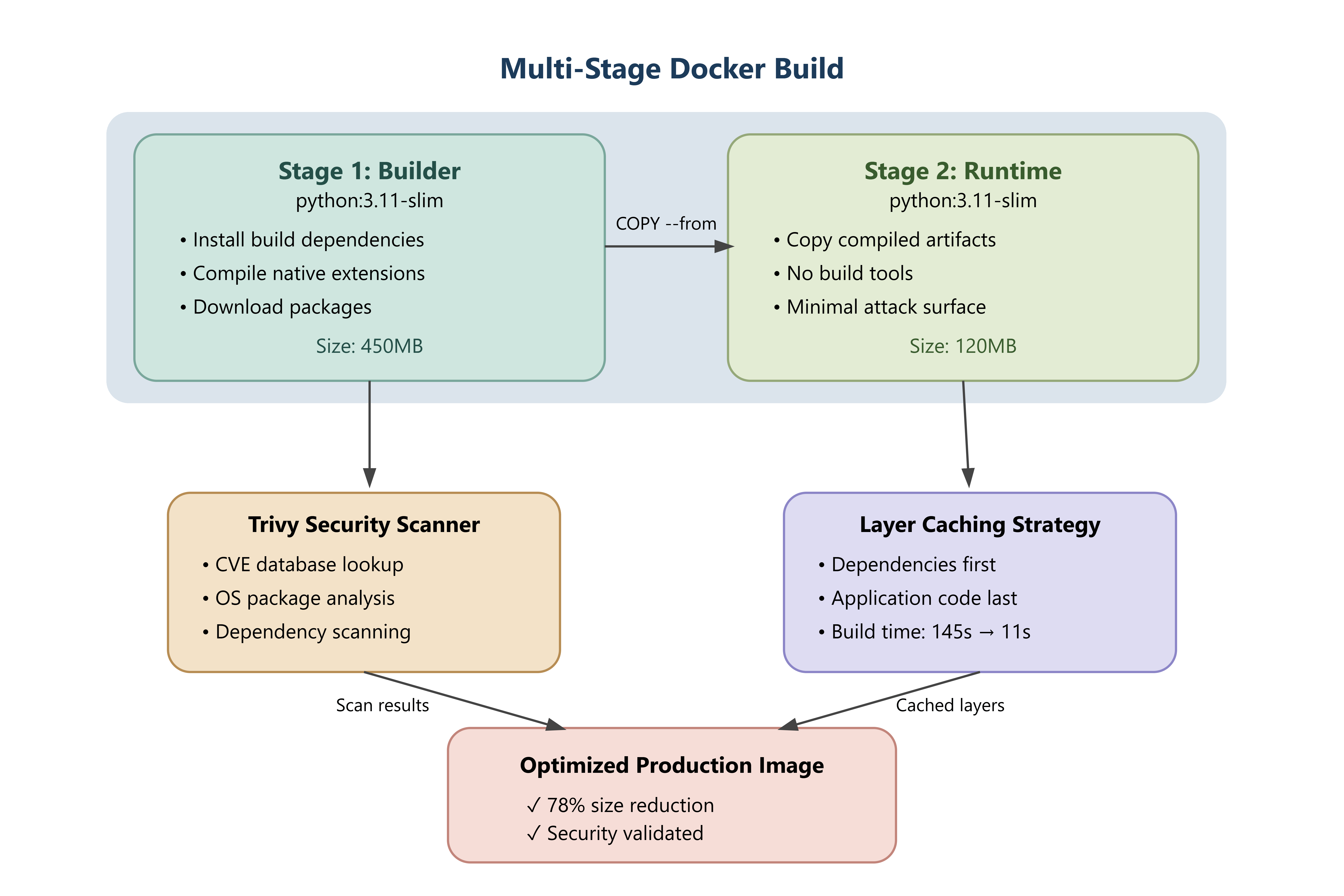
Lesson 62: Image Optimization - Building Production-Grade Container Images
What We’re Building Today
Multi-stage Docker builds reducing final image size by 70-85% while maintaining full functionality
Automated vulnerability scanning pipeline using Trivy integrated into CI/CD workflows
Layer caching optimization strategies cutting build times from minutes to seconds in production deployments
Security-hardened base images with minimal attack surface following NIST container security guidelines
Why This Matters: The Hidden Cost of Bloated Images
Container image size directly impacts your production infrastructure costs, deployment velocity, and security posture. At scale, a 500MB image versus a 50MB optimized image translates to terabytes of unnecessary network transfer when orchestrating across hundreds of nodes. Netflix reduced their container registry storage by 60% and improved deployment times by 40% through systematic image optimization. Spotify’s platform engineering team decreased security patching cycles from weeks to days by minimizing their container attack surface.
The financial impact compounds rapidly. A 1GB image deployed to 1,000 pods across three regions generates 3TB of pull traffic per deployment. At AWS data transfer rates, that’s $270 per rollout. Multiply by daily deployments, and bloated images cost organizations six figures annually in infrastructure overhead alone. Beyond economics, image size affects mean time to recovery. During incidents, pulling a 100MB image versus 800MB can mean the difference between 30-second and 4-minute pod startup times—critical when autoscaling under load.
Multi-stage Docker Build Architecture :